
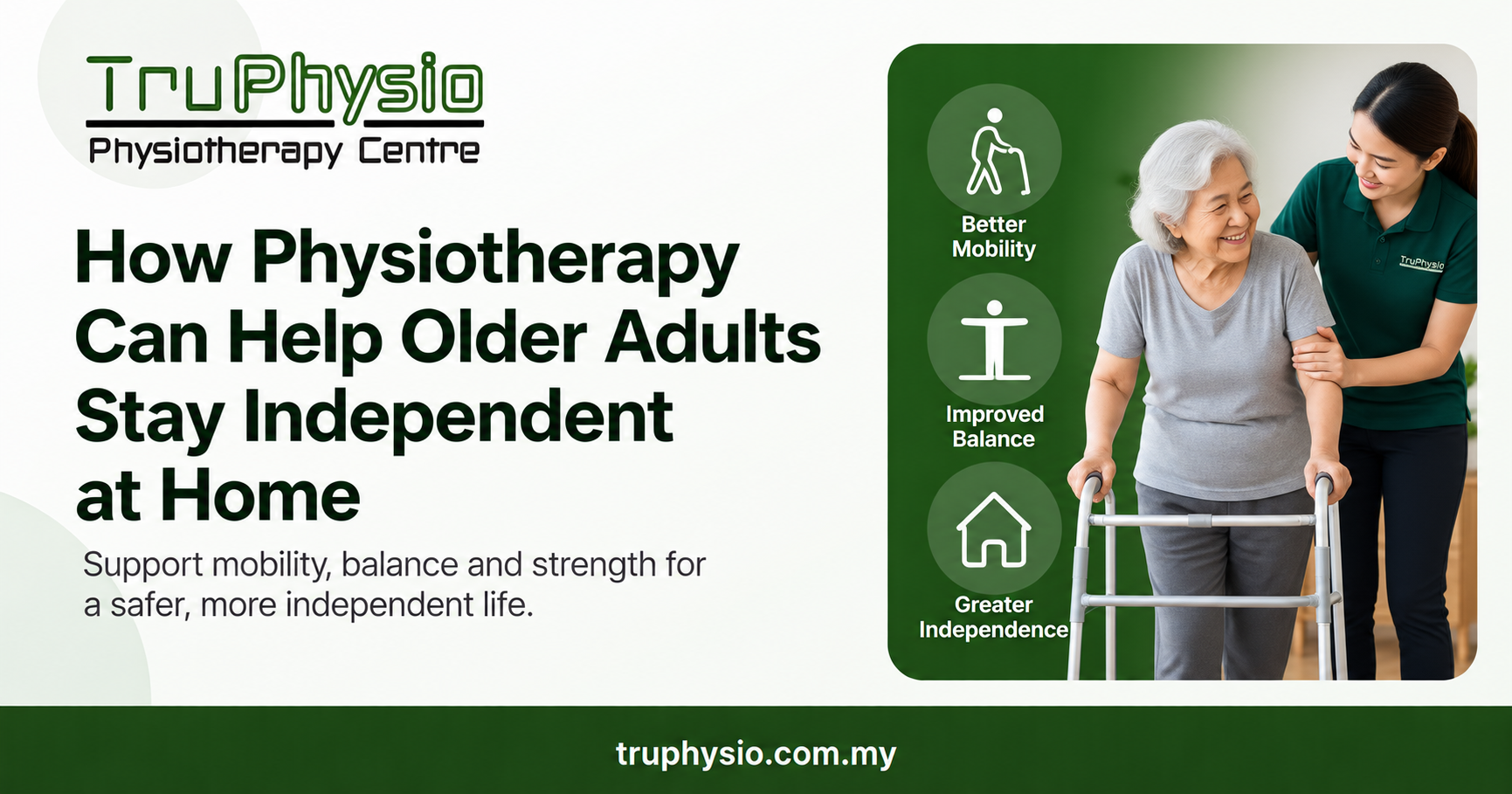
How Physiotherapy Can Help Older Adults Stay Independent at Home
Ask most older adults what matters to them, and the answer is often simple: “I want to keep doing things on my own.” Walking to the kitchen, getting out of a chair, climbing stairs and going to the market are what independence looks like day to day.
Independence doesn’t have to disappear with age. Evidence from health organisations suggests that physiotherapy can help older adults maintain strength, balance and mobility, which supports safer daily living at home. This guide explains how, what to expect, and when to seek help.
Quick Answer
- Physiotherapy can help older adults build strength, improve balance and manage joint pain, which are all linked to staying independent.
- Falls are a major concern. The World Health Organization (WHO) reports that around 28–35% of people aged 65 and over fall each year, and exercise programmes that include balance training are recommended to reduce this risk.
- A physiotherapist designs exercises around your health conditions, home environment and goals. Results vary from person to person.
- Treatment can take place at a clinic or at home, depending on your mobility.
Why Independence Becomes Harder With Age
Muscle mass gradually declines with age, and this can speed up when people become less active. Joint stiffness, arthritis, slower reflexes or a past stroke can make everyday movement feel risky.
Many seniors then enter a cycle: they feel unsteady or in pain, so they move less. Muscles weaken further, balance worsens, and fear of falling grows. Physiotherapy aims to break this cycle through safe, guided movement. As Malaysia’s population ages, supporting older family members at home is becoming a concern for more households.
How Physiotherapy Can Help Older Adults Stay Independent
A physiotherapist looks at how you move and what is limiting you, not only where it hurts. Here are the main areas of support.
1. Balance Training and Fall Prevention
After assessing your balance, walking pattern and leg strength, a physiotherapist may include:
- Standing balance exercises with support
- Walking and turning practice
- Sit-to-stand exercises for leg strength
- Guidance on moving safely at home
WHO guidance for older adults with poor mobility recommends activity that emphasises functional balance and strength on three or more days a week. A physiotherapist can help ensure these exercises suit your condition.
2. Strength and Muscle Maintenance
Stronger legs and hips support stairs, chair transfers and getting out of bed. Programmes often use gentle resistance exercises and movements that copy daily tasks, such as standing up or carrying light items.
3. Managing Joint and Muscle Pain
Pain often leads seniors to avoid movement. Hands-on techniques, targeted exercise and activity-pacing advice may help with conditions such as knee osteoarthritis, back stiffness and shoulder pain. You can learn more about our approach to knee pain treatment, back pain treatment and shoulder pain treatment.
4. Rehabilitation After a Stroke
Stroke can affect strength, coordination and walking. Rehabilitation focuses on balance, limb function and safe transfers such as bed to chair.
5. Posture, Walking and Mobility Aids
A physiotherapist can assess walking patterns and advise on whether a cane or walker is appropriate and how to use it correctly.
6. Confidence in Movement
Fear of falling can limit activity as much as physical weakness. Supervised, gradual progress can help people feel more comfortable moving again.
If you are wondering when exercise-based care is appropriate and when surgery may still be needed, read our article on whether physiotherapy can help avoid surgery.
What to Expect at Your First Session
- A conversation: health history, medications, past falls, pain and daily routine.
- A physical assessment: posture, strength, flexibility, balance and walking.
- An explanation: your findings and the available treatment options.
- A personalised plan: goals based on your priorities, such as walking to the park or getting in and out of a car.
At TruPhysio, you can book without a doctor’s referral letter. If you have seen a doctor or specialist, bring any reports or scans. The first consultation usually takes about 45 to 60 minutes. Treatment aims to reduce pain, and some exercises may cause mild, temporary discomfort. Your therapist will explain what to expect and adjust to your comfort.
Clinic or Home: Choosing What Suits You
At a clinic: If you are looking for a Physiotherapy Center in Kuala Lumpur, TruPhysio Physiotherapy Centre is located in Pandan Jaya and has KKM-registered physiotherapists.
At home: If travelling is tiring, painful or unsafe, physiotherapy to your home is an option. A therapist can see your living space, spot hazards and practise real movements, such as getting up from your own sofa. Home care is commonly used for seniors, post-surgery recovery, stroke rehabilitation and people with limited mobility.
Everyday Habits That Support Independence
Check with your physiotherapist or doctor before starting new exercises, especially if you have heart conditions, dizziness or recent surgery.
- Stay active daily, even with short walks indoors.
- Practise standing up from a sturdy chair, if your therapist advises it.
- Remove loose rugs, improve lighting and use non-slip mats and bathroom grab bars.
- Wear supportive, non-slip footwear.
- Have your vision and medications reviewed regularly, as both can affect balance.
When Should You See a Physiotherapist?
Consider an assessment if you or a family member:
- Has fallen or nearly fallen recently
- Feels unsteady when walking or turning
- Struggles to stand up from a chair or toilet
- Avoids stairs or outings because of pain or fear
- Has recently had surgery, a hospital stay or a stroke
Seek urgent medical care first for sudden weakness on one side, trouble speaking, chest pain, severe sudden pain, or a head injury after a fall.
Frequently Asked Questions
How can physiotherapy help older adults at home?
Physiotherapy can help older adults at home by building strength, balance and mobility through personalised exercises, and by identifying safety risks in the living space.
Is physiotherapy safe for people over 70 or 80?
A qualified physiotherapist adapts exercises to your age, health conditions and ability. Age alone is not a reason to avoid physiotherapy, but your therapist will first assess whether it is suitable for you.
Can physiotherapy help prevent falls?
Exercise programmes that include balance and strength training are recommended by health organisations to help reduce fall risk. Individual results vary.
How many sessions will I need?
It depends on your condition and goals. Your physiotherapist will review progress and adjust the plan.
Do I need a referral for physiotherapy?
At TruPhysio, you can book directly without a referral letter. If a doctor has referred you, bring the relevant reports.
Final Thoughts
Staying independent at home is about keeping the strength, balance and confidence to manage daily life safely. As this guide explains, physiotherapy can help older adults move with less difficulty and stay active at home, though outcomes depend on each person’s health and goals.
If you or a loved one is finding daily movement harder, you can book an assessment with the team at TruPhysio Physiotherapy Centre.


