
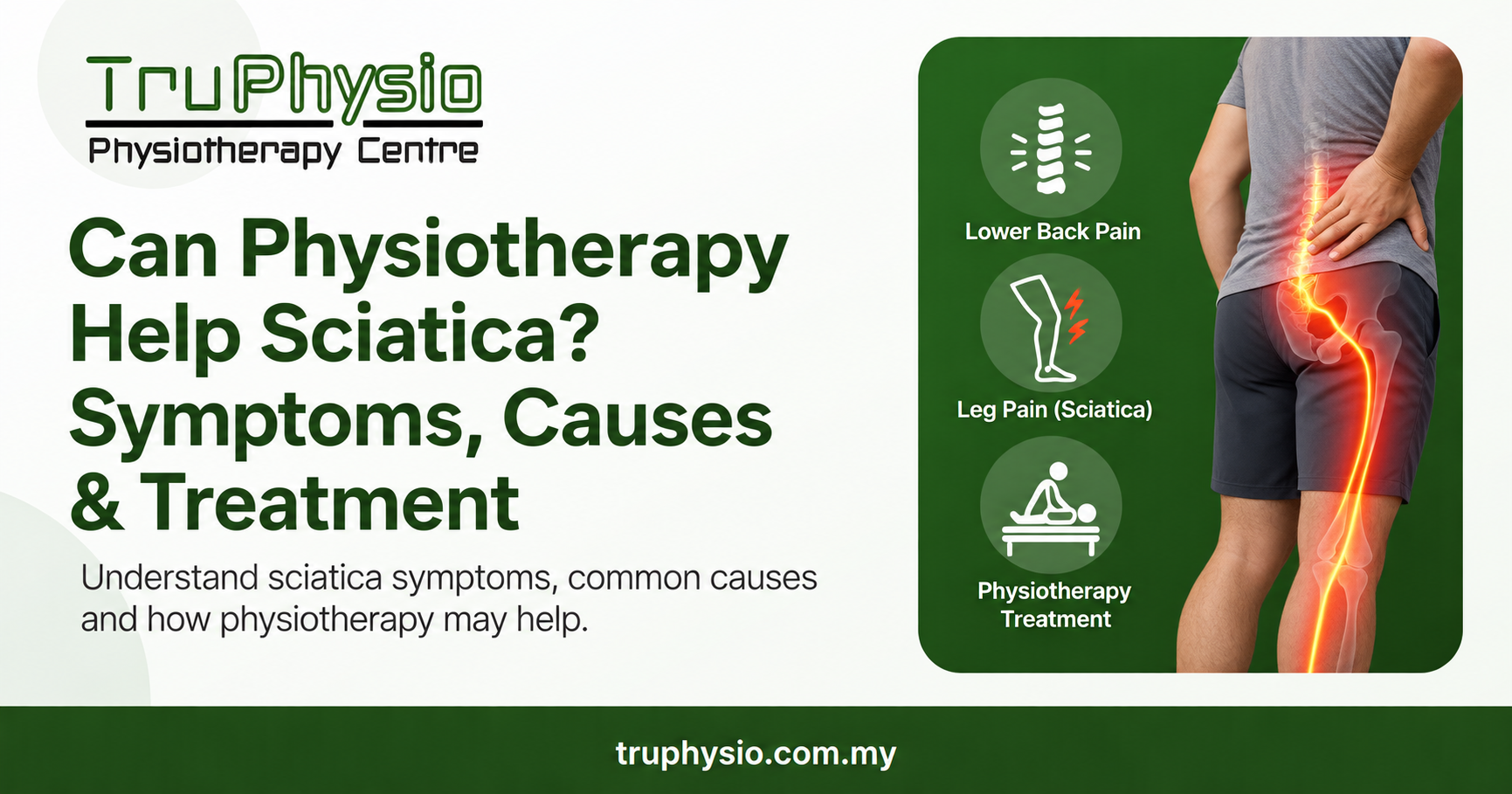
Can Physiotherapy Help Sciatica? Symptoms, Causes & Treatment
A sharp, burning pain shoots from your lower back down your leg. Sitting at your desk becomes uncomfortable, and getting out of bed feels like a challenge. If this sounds familiar, you may be dealing with sciatica.
The good news is that most people with sciatica can improve without surgery. So, can physiotherapy help sciatica? Yes. For most people, physiotherapy is one of the safest and most effective first-line treatments. It eases pain and also addresses the underlying cause, which helps reduce the chance of it returning.
This guide explains what sciatica is, why it happens, how physiotherapy helps, and when you should seek urgent medical care.
Quick Answer: Does Physiotherapy Help Sciatica?
Yes. Physiotherapy can reduce sciatic nerve pain, improve mobility, strengthen supporting muscles and correct movement habits that irritate the nerve. Clinical guidelines commonly recommend staying active and using exercise-based rehabilitation as an early approach for sciatica, rather than prolonged bed rest. Many people improve gradually over several weeks, though recovery time varies from person to person.
What Is Sciatica?
Sciatica is not a diagnosis in itself. It is a symptom of irritation or compression of the sciatic nerve. This is the longest nerve in the body. It starts in the lower spine, runs through the buttock and travels down the back of each leg.
Because the nerve is long, symptoms can be felt anywhere along its path. Sciatica usually affects one side of the body.
Common Symptoms of Sciatica
Symptoms differ from person to person, but the most common signs include:
- Pain that travels from the lower back or buttock down the back of the leg
- Burning, sharp or electric-shock-like sensations
- Numbness or tingling in the leg or foot
- Muscle weakness in the leg or foot
- Pain that worsens with sitting, coughing, sneezing or bending forward
- Difficulty standing up or walking for long periods
Mild sciatica may feel like a dull ache. Severe sciatica can make it hard to move normally.
What Causes Sciatica?
Understanding the cause matters because treatment works best when it targets the root problem. Common causes include:
1. Slipped (herniated) disc
This is one of the most common causes. When a spinal disc bulges or ruptures, it can press on a nearby nerve root. If you suspect this, read more about how slipped disc rehabilitation can help.
2. Spinal stenosis
Narrowing of the spinal canal can squeeze the nerves, especially in older adults.
3. Piriformis syndrome
A tight piriformis muscle deep in the buttock can irritate the sciatic nerve.
4. Degenerative disc disease
Age-related wear and tear can change how the spine handles load.
5. Spondylolisthesis
This occurs when one vertebra slips forward over another.
6. Poor posture and prolonged sitting
Long hours at a desk, weak core muscles and repetitive lifting can all contribute to nerve irritation.
7. Injury or trauma
Falls, accidents or sports injuries can affect the lower spine or hip region.
How Physiotherapy Helps Sciatica
A physiotherapist does not just treat the pain. They look at why the nerve is irritated. Here is how physiotherapy typically helps:
1. Thorough Assessment
Your physiotherapist reviews your medical history, checks posture and spinal movement, and tests strength, flexibility and nerve responses. This identifies whether the cause is a disc, a tight muscle or a movement pattern.
2. Pain Relief Techniques
Depending on your condition, treatment may include manual therapy, soft-tissue techniques, positioning strategies and other pain-relief methods to calm irritated tissues.
3. Targeted Exercises
Exercise is central to sciatica rehabilitation. Your programme may include:
- Gentle nerve mobility exercises
- Core stabilisation exercises
- Hip and glute strengthening
- Hamstring and piriformis stretching
- Lower back mobility work
4. Posture and Ergonomic Advice
Small changes to how you sit, stand, lift and sleep can reduce pressure on the nerve and protect your back day to day.
5. Education and Prevention
A good physiotherapist teaches you how to manage flare-ups and prevent recurrence, so you are not dependent on repeated treatments.
Physiotherapy vs Other Treatments for Sciatica
| Approach | Purpose | Notes |
|---|---|---|
| Physiotherapy | Treats the cause, restores movement, prevents recurrence | Usually recommended as a first-line option |
| Pain medication | Temporary symptom relief | Does not correct the underlying problem |
| Massage | Relaxes tight muscles | Often works best alongside rehabilitation (see Physiotherapy vs Massage Therapy) |
| Injections | Reduce inflammation in selected cases | Usually considered when other options are not enough |
| Surgery | Relieves severe nerve compression | Generally reserved for serious or persistent cases |
How Long Does Sciatica Take to Heal?
Recovery depends on the cause and severity. Many mild to moderate cases improve within a few weeks to a few months with the right care. Cases linked to disc problems or long-standing nerve compression may take longer. Your physiotherapist can give a realistic timeline after assessing your condition.
Simple Tips You Can Try at Home
These general tips may help while you arrange an assessment:
- Keep moving gently. Short walks are usually better than complete rest.
- Avoid sitting for long periods. Stand up and change position every 30 minutes.
- Use heat or cold packs for short periods if they feel comfortable.
- Avoid heavy lifting and sudden twisting while symptoms are flaring.
- Do not force painful stretches. Stretching should feel comfortable, not sharp.
These are general tips, not a substitute for professional advice. If your pain is severe or not improving, get assessed.
When Should You See a Physiotherapist?
Consider booking an assessment if:
- Leg or back pain lasts more than a few days
- Pain keeps returning
- You feel tingling, numbness or weakness
- Pain interferes with sleep, work or daily activities
Early assessment often leads to a clearer diagnosis and faster progress.
Sciatica Treatment at TruPhysio, Kuala Lumpur
If you are looking for a trusted Physiotherapy Center in Kuala Lumpur, TruPhysio offers personalised, evidence-based care for sciatica, back pain, slipped disc and related conditions. Treatment is provided by KKM-registered physiotherapists, and each plan is tailored to your condition, lifestyle and recovery goals.
Frequently Asked Questions (FAQs)
Can physiotherapy cure sciatica?
Physiotherapy can treat the underlying cause of sciatica and significantly reduce symptoms for many people. Results depend on the cause, severity and how consistently you follow your programme.
How many physiotherapy sessions are needed for sciatica?
It varies. Some people improve after a few sessions, while others need longer, structured rehabilitation. Your physiotherapist will review your progress and adjust the plan.
Is physiotherapy painful for sciatica?
Treatment aims to reduce pain, not cause it. You may feel mild temporary discomfort during some exercises, but your physiotherapist will adjust the treatment to your comfort level.
Should I rest or exercise with sciatica?
Short rest during severe flare-ups is fine, but prolonged bed rest is generally not recommended. Gentle, guided movement usually supports recovery better.
Can sciatica go away on its own?
Mild cases sometimes settle by themselves, but without addressing the cause it may return. A physiotherapy assessment helps identify what is driving your symptoms.
Do I need an MRI before starting physiotherapy?
Not always. A physiotherapist can begin with a clinical assessment and will advise if further imaging or medical review is needed.
Can I get sciatica treatment at home?
Yes. TruPhysio offers home-based physiotherapy for patients who have difficulty travelling, such as older adults or those recovering after surgery.
Final Thoughts
Sciatica can be painful and frustrating, but it is manageable. Physiotherapy offers a safe, evidence-based way to relieve nerve pain, restore movement and reduce the risk of it coming back. The earlier you get assessed, the sooner you can return to the activities you enjoy.


